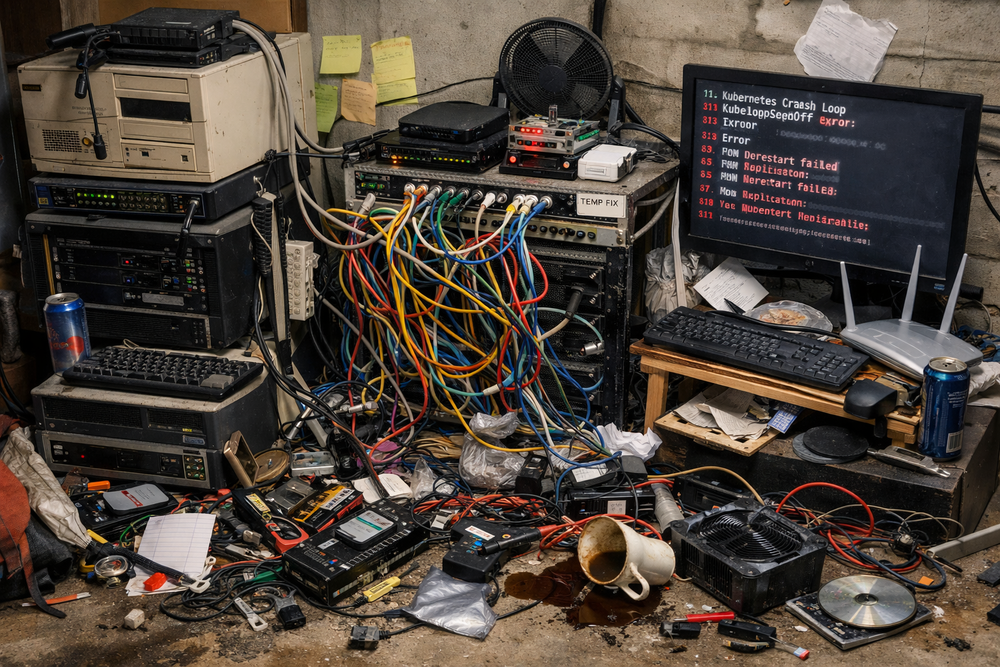
Why Every IT Professional Should Have a Homelab
There’s a moment every SRE remembers.
It’s usually late. Monitoring is quiet. You think you’ve finally earned a calm night. Then something small breaks. Not catastrophically — just enough to make you say, “That’s weird.”
And suddenly you’re three layers deep:
- DNS isn’t resolving the way you expect
- TLS is valid but not trusted
- The service is up but unreachable
- The logs are clean… until they aren’t
That moment is where theory ends and experience begins.
And if you haven’t felt that moment outside of production, you’re learning the most expensive way possible.
That’s why every IT professional — especially anyone touching SRE, platform, DevOps, or infrastructure — should have some kind of homelab.
The Lab Is Where the Lie Falls Apart
Vendor docs are clean. Architecture diagrams are tidy. Tutorials assume the happy path.
Homelabs don’t.
In a homelab:
- Certificates expire because you forgot to rotate them
- Storage fills up because retention policies were a guess
- DNS breaks because you changed “one small thing”
- Backups exist… until you try restoring them
Nothing is abstracted away. There’s no “cloud magic.” There’s no support contract to hide behind.
If it’s broken, it’s broken because of something you did or didn’t do.
That accountability rewires how you think.
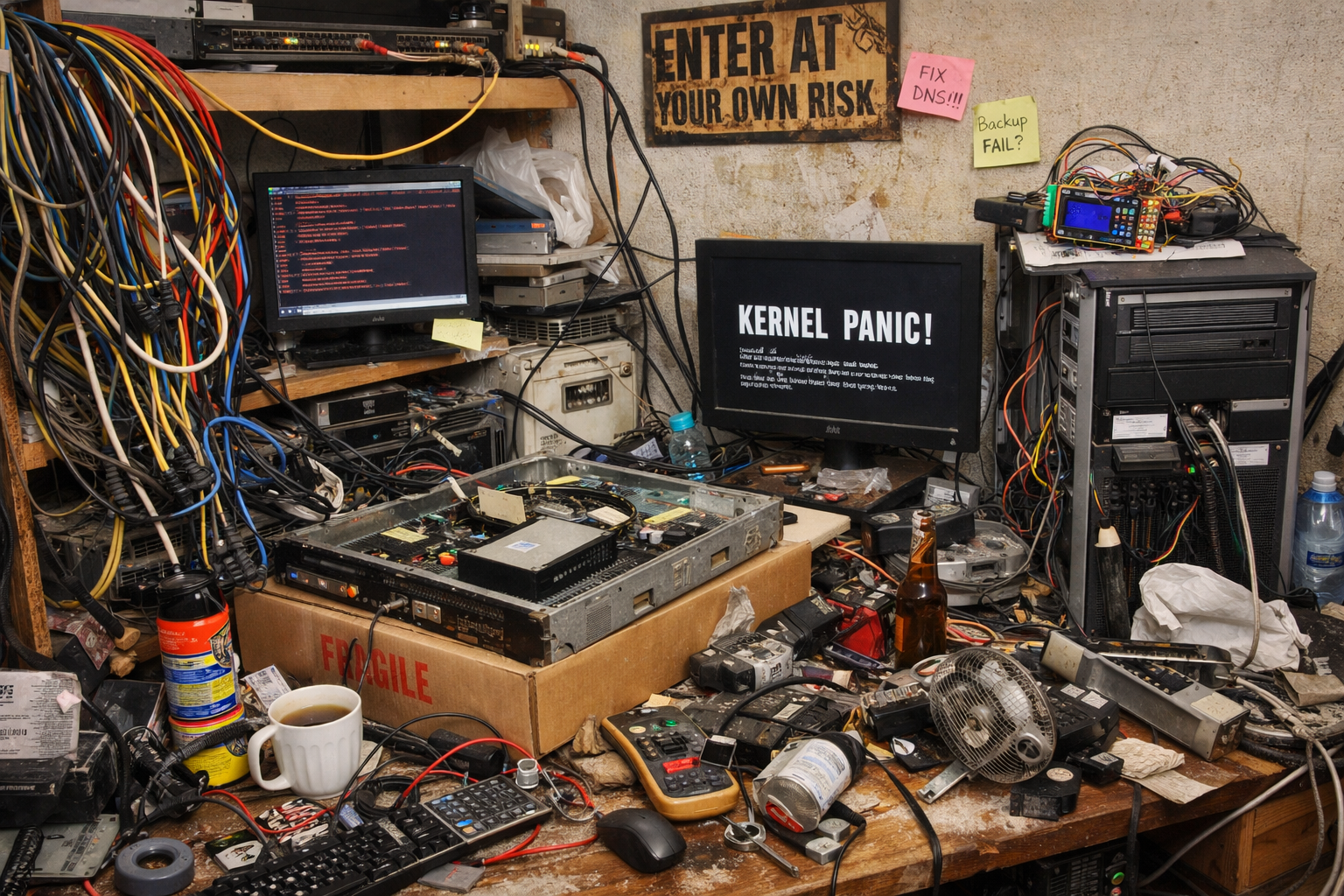
Production Teaches You Caution. Homelabs Teach You Truth.
In production, you move carefully — and you should.
But that also means you rarely get to break things properly.
In a homelab:
- You tear everything down just to rebuild it better
- You migrate auth systems because the old one annoyed you
- You refactor networking because it “felt wrong”
- You learn how long recovery actually takes
You don’t just learn how to deploy.
You learn:
- How systems fail
- How failures cascade
- How assumptions lie
- How fixes introduce new problems
That’s SRE muscle memory. And it’s earned, not read.
“It Worked Yesterday” Is a Gift — If It’s Yours
There’s a special frustration in a homelab failure.
Nothing changed.
Except it did.
You upgraded something weeks ago.
You rotated a secret manually once.
You copy-pasted a config at 1am and forgot about it.
Production hides those lessons behind incident bridges and postmortems.
Homelabs shove your face into them.
You learn to:
- Trace config drift
- Respect state
- Fear silent failures
- Document for future you, not auditors
That pain sharpens instincts you cannot fake in interviews or on resumes.
The Confidence Shift Is Real
Something subtle happens after a few months of running your own stack.
You stop saying:
“I think that’s how it works.”
And start saying:
“Here’s why that breaks.”
You’ve seen:
- What happens when ingress is misaligned with DNS
- Why email is still cursed in 2025
- How auth systems fail gracefully… or don’t
- Why backups that aren’t tested don’t exist
You don’t panic when something goes sideways — because you’ve already fixed worse, alone, with no safety net.
That confidence shows up everywhere:
- During incidents
- In design reviews
- In architecture debates
- In interviews
It’s quiet, but unmistakable.
Your Homelab Doesn’t Need to Be Fancy
This isn’t about having a rack that looks good on Reddit.
A homelab can be:
- One mini PC
- An old laptop
- A few VMs
- Containers on a single node
What matters is ownership.
If you’re responsible for:
- The network
- The certificates
- The storage
- The auth
- The backups
You’re learning.
The Best SREs Aren’t Born — They Break Things First
Every strong SRE I’ve worked with has the same trait:
They’ve broken systems on purpose, by accident, and at the worst possible time — and learned from it.
Homelabs create that experience without risking customers, revenue, or sleep schedules.
They turn:
- Curiosity into skill
- Failure into instinct
- Theory into judgment
If you work in IT and you don’t have a place where things can safely break — you’re missing the most honest teacher in this field.
And it’s always available.
Usually waiting for you to break DNS again.
Because it’s always DNS.